
Implementation Effort
- Requires minimal effort
- Timeline between 2-3 weeks*
* Assuming an agency has an existing, configured AASHTOWare Safety instance and all required data

Our Customer Success team helps agencies turn crash data into actionable insights. The processes below show how they’re making their communities safer.
An overview of the Local Road Safety Action Plan Safety Process for the Georgia Department of Transportation.
* Assuming an agency has an existing, configured AASHTOWare Safety instance and all required data


The Local Road Safety Plan (LRSP) initiative focuses on improving safety on locally owned roadways by identifying, analyzing, and prioritizing safety improvements tailored to the unique needs of local roadways.
Because Safety is a state-wide concern, the Georgia Department of Transportation (GDOT) knew it needed to partner with local roadway owners to advance its Vision Zero goal. This came with unique challenges for both GDOT and the local roadway owners. GDOT needed to share crash data with local agencies, and help them identify areas for potential improvement, and the local roadway owners needed to identify easy-to-implement, low-cost countermeasures to improve safety in their communities.
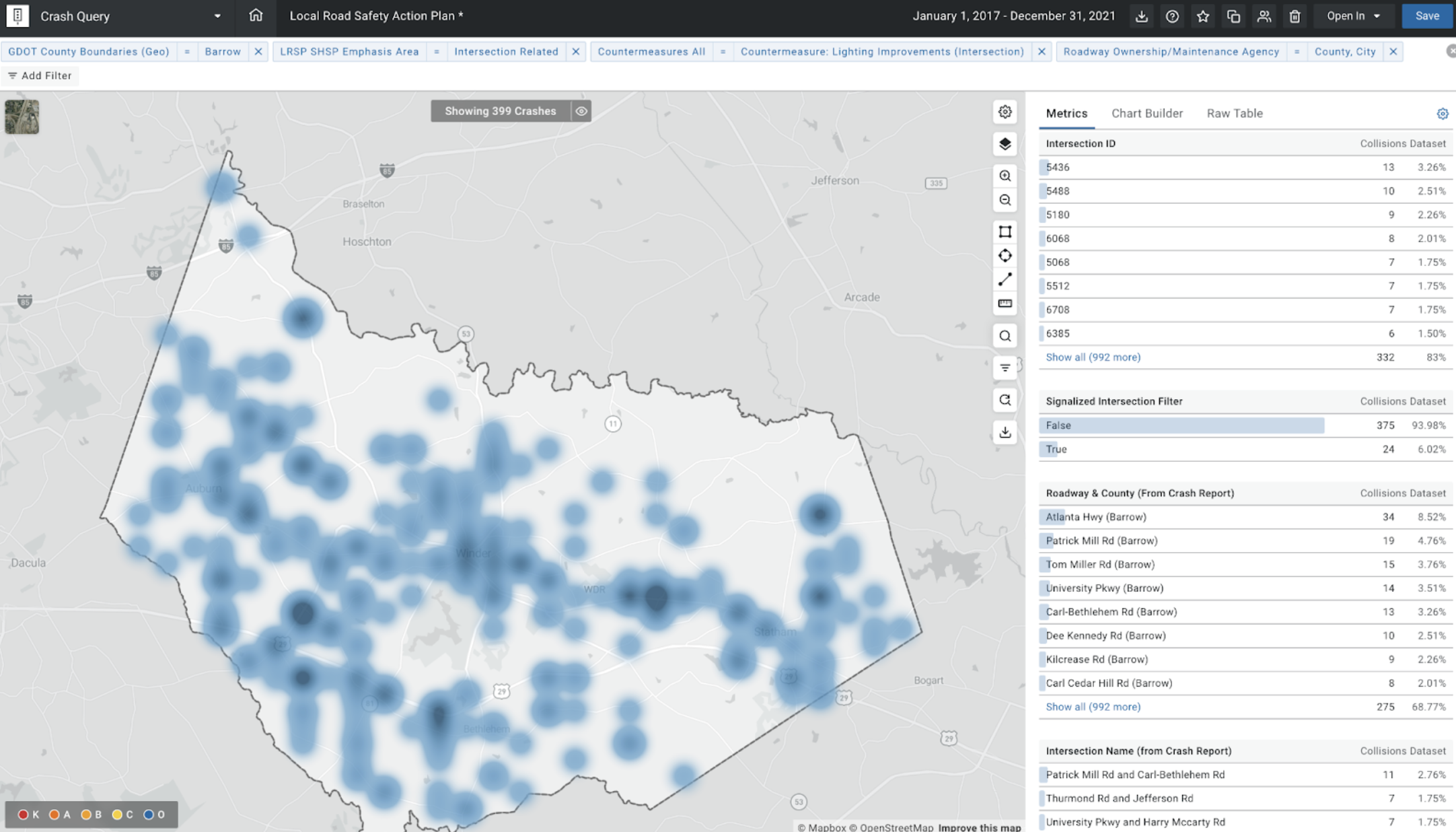
“The Local Road Safety Action Plan” grew from the realization that local participation was necessary to achieve Vision Zero. To encourage local government involvement in highway safety, we worked with FH WA to develop partnerships with local governments. The team soon realized local governments needed access to data to better understand their unique needs. To meet this need, the Local Road Safety Action Plan Dashboard and Crash Query Template were developed to inform local governments based on crash history.” The data provided by the tools is translated into actionable items that can be used to develop plans for locally supported transportation safety.
–Dave Adams, GDOT State Safety Program Manager
By providing access to crash data and targeting proven, low-cost countermeasures, GDOT, in conjunction with the Federal Highway Administration, helped local agencies identify where and what types of crashes were occurring and what they could do to prevent them in the future.
The LRSP program can involve various groups, such as:
One of the challenges GDOT faced was identifying the best way to deliver this essential crash data. Because their targeted users had varying degrees of expertise, ranging from experienced safety professionals, to stakeholders just beginning their safety journey, GDOT settled on providing multiple delivery options, including Dashboards, and saved Crash Query templates.
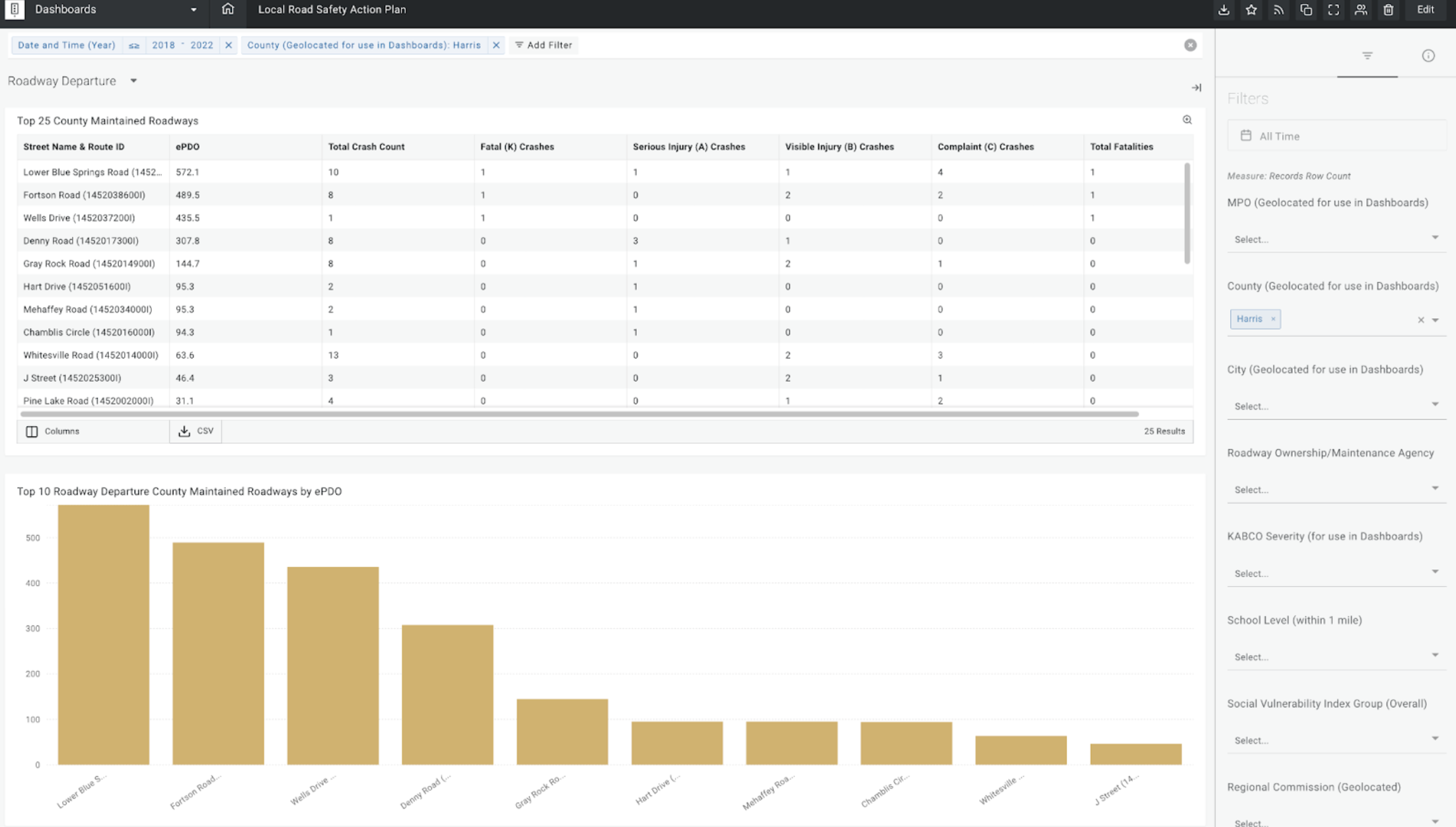
Additionally, GDOT utilizes key filters, to help agencies identify key Strategic Highway Safety Plan crash types, as well as countermeasures that might be used to address key crash populations in their community.
More information is available here: