
Implementation Effort
- Requires minimal effort
- Timeline between 2-3 weeks*
* Assuming an agency has an existing, configured AASHTOWare Safety instance and all required data

Our Customer Success team helps agencies turn crash data into actionable insights. The processes below show how they’re making their communities safer.
Agencies use AASHTOWare Safety to share crash data with organizations throughout their state.
* Assuming an agency has an existing, configured AASHTOWare Safety instance and all required data


Transportation agencies often partner with other departments and organizations to accomplish specific initiatives and projects. However, sharing large datasets comes with unique challenges and constraints that can be difficult to overcome.
If everyone’s work is based on different datasets, reaching a consensus for projects can be arduous. Transportation departments have solved this problem by sharing their state’s crash data within the ASHTOWare Safety platform with various teams. They can now ensure everyone can access the same information for their analyses.
The West Virginia Department of Transportation (WVDOT) uses Crash Query to share the state’s crash data with the planning and design departments, local districts, and Metropolitan Planning Organizations (MPOs). These organizations are now empowered to find the data they need independently, freeing time for WVDOT employees and these additional departments. There’s no longer a need to request crash data—it’s readily available anytime the local organizations need it.
“It is the mission of the West Virginia Department of Transportation to create and maintain for the people of West Virginia, the United States, and the world a multi-modal and inter-modal transportation system that supports the safe, effective, and efficient movement of people, information, and goods that enhances the opportunity for people and communities to enjoy environmentally sensitive and economically sound development.”
When everyone uses the same datasets and tools to generate reports, team members can rest assured that they’re all working from the same numbers and logic definitions. For example, all crash factors are defined identically. Anytime a user searches Roadway Departure crashes, they know that other users will see the exact same results. This confidence in the data decreases miscommunication and discrepancies in collaborative projects.
Another benefit of sharing Crash Query access has been empowering local agencies to resolve data requests at the city or district level. This has helped ease the burden on WVDOT, which receives hundreds of data requests monthly. The WVDOT Safety Team has used this extra time to provide additional in-depth analysis on safety projects.
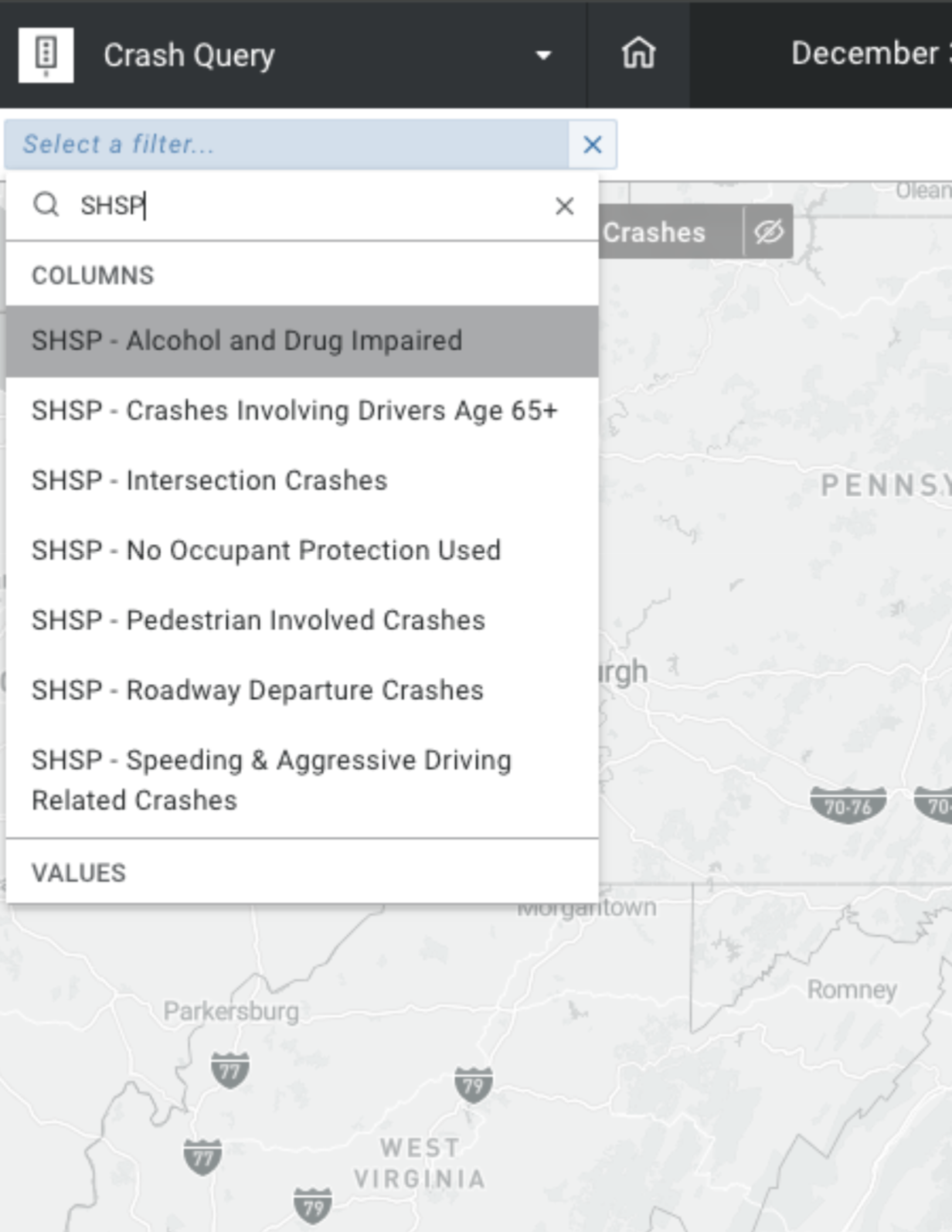
(Strategic Highway Safety Plan Emphasis Areas available as filters in Crash Query)
The South Carolina Department of Transportation (SCDOT) has taken a similar approach. The department has shared AASHTOWare Safety access with local Metropolitan Planning Organizations (MPOs) and Councils of Government (COG) to ensure everyone working on projects uses the same data and analysis methods.
With shared access, there’s no need to second-guess if everyone is using different or outdated datasets—everyone is working from the same centralized source of truth.
Before COGs and MPOs in South Carolina had AASHTOWare Safety access, they had to request crash data from SCDOT. Tailoring the datasets differently for each MPO and COG took additional time, which limited the MPOs and COGs ability to complete analyses of the latest crash data, as well as put additional strain on SCDOT.
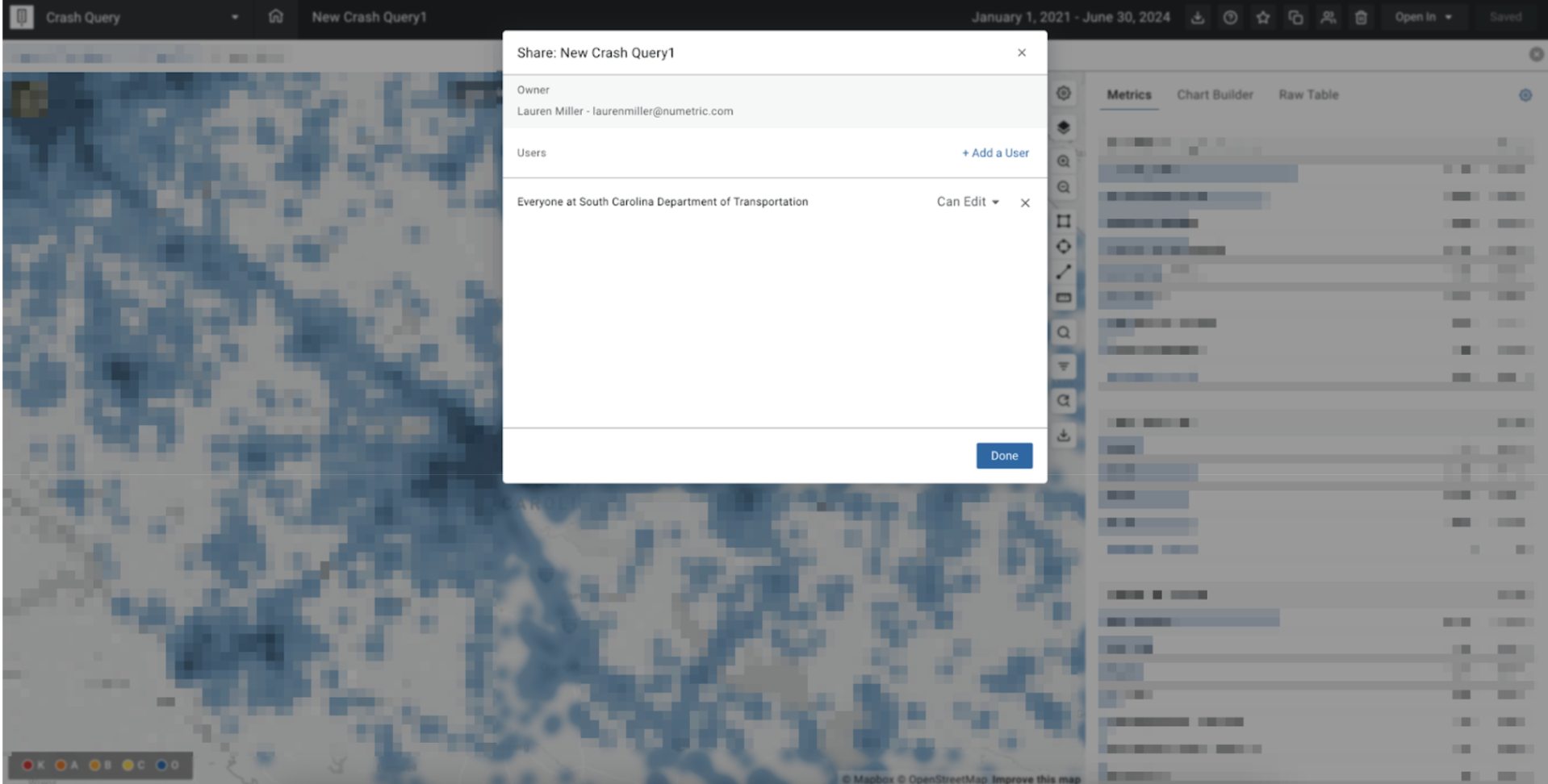
Sharing Crash Query has empowered these teams to pull the real-time data they need independently. Everyone involved benefits from this new system. Since this information is available on-demand, COGs, and MPOs can easily execute data-driven analyses, and SCDOT can spend less time fulfilling data requests.
More information on this topic can be found below: