
Implementation Effort
- Requires minimal effort
- Timeline between 2-3 weeks*
* Assuming an agency has an existing, configured AASHTOWare Safety instance and all required data

Our Customer Success team helps agencies turn crash data into actionable insights. The processes below show how they’re making their communities safer.
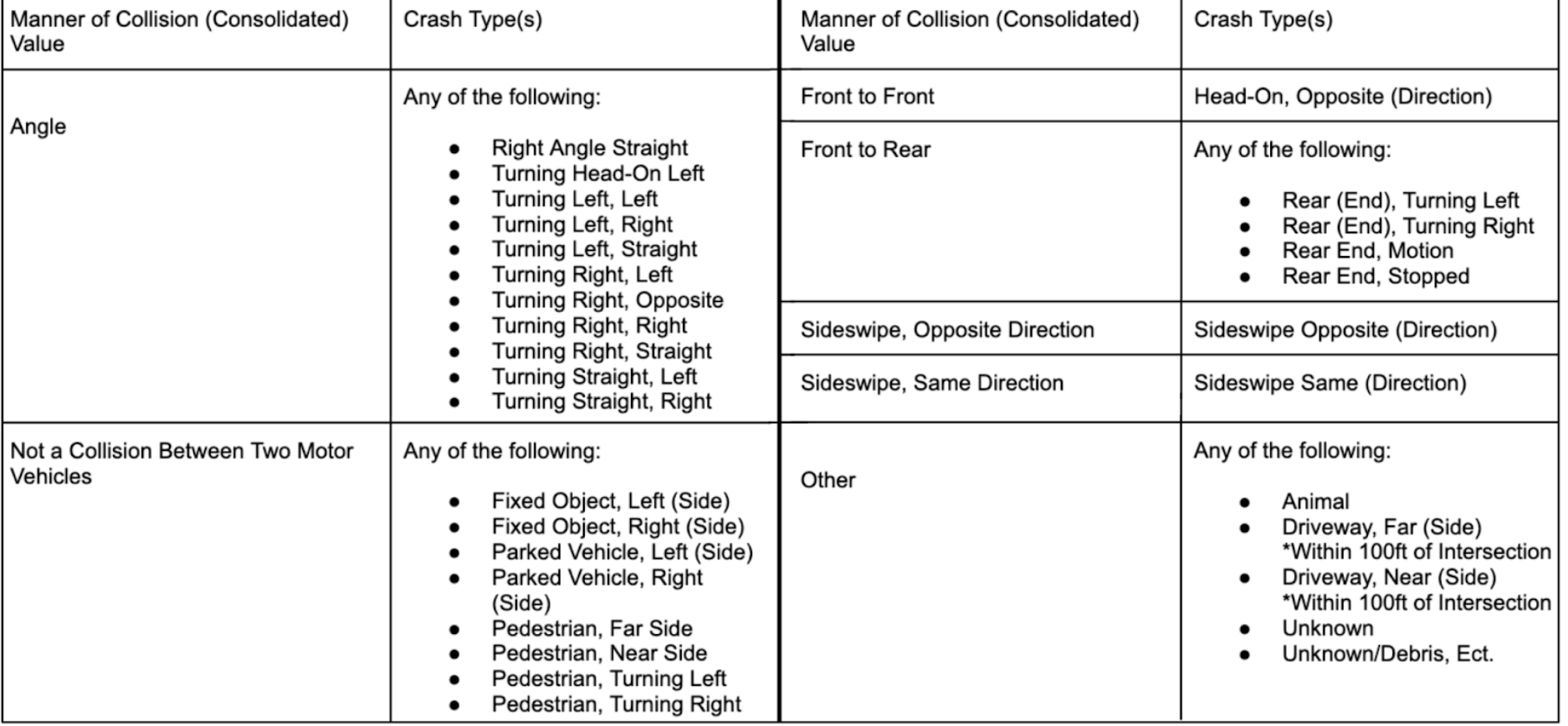
The Oklahoma Department of Transportation partnered with AASHTOWare Safety to simplify the manner of collision fields into one consolidated filter aligned with MMUCC standards.
* Assuming an agency has an existing, configured AASHTOWare Safety instance and all required data


The Oklahoma Department of Transportation (ODOT) partnered with AASHTOWare Safety to create a new custom filter in the tool that maps the department’s existing Manner of Collision field to the standardized Model Minimum Uniform Crash Criteria (MMUCC) categories.
The most recent edition of the MMUCC recommends that agencies increase their alignment with MMUCC standards in an effort to “improve national crash data uniformity and completeness.
“The primary benefit of aligning to the MMUCC guideline is increasing the national uniformity and completeness of crash data, which is necessary to identify traffic safety problems and design countermeasures to improve traffic safety within each State and nationally.”
–MMUCC Guideline: Model Minimum Uniform Crash Criteria, 6th Edition
For Oklahoma’s transportation department, simplifying crash types to MMUCC values has streamlined crash data analysis, specifically for intersection-related studies.
By aligning with MMUCC standards, the consolidated categories streamline and speed up intersection crash analyses. Instead of sorting through a long list of specific crash types—such as right-angle, straight, or turning head-on left—analysts can now quickly spot trends with simplified groupings. For example, these detailed crash types and more are now rolled into a single, easy-to-identify category: Angle Crash.
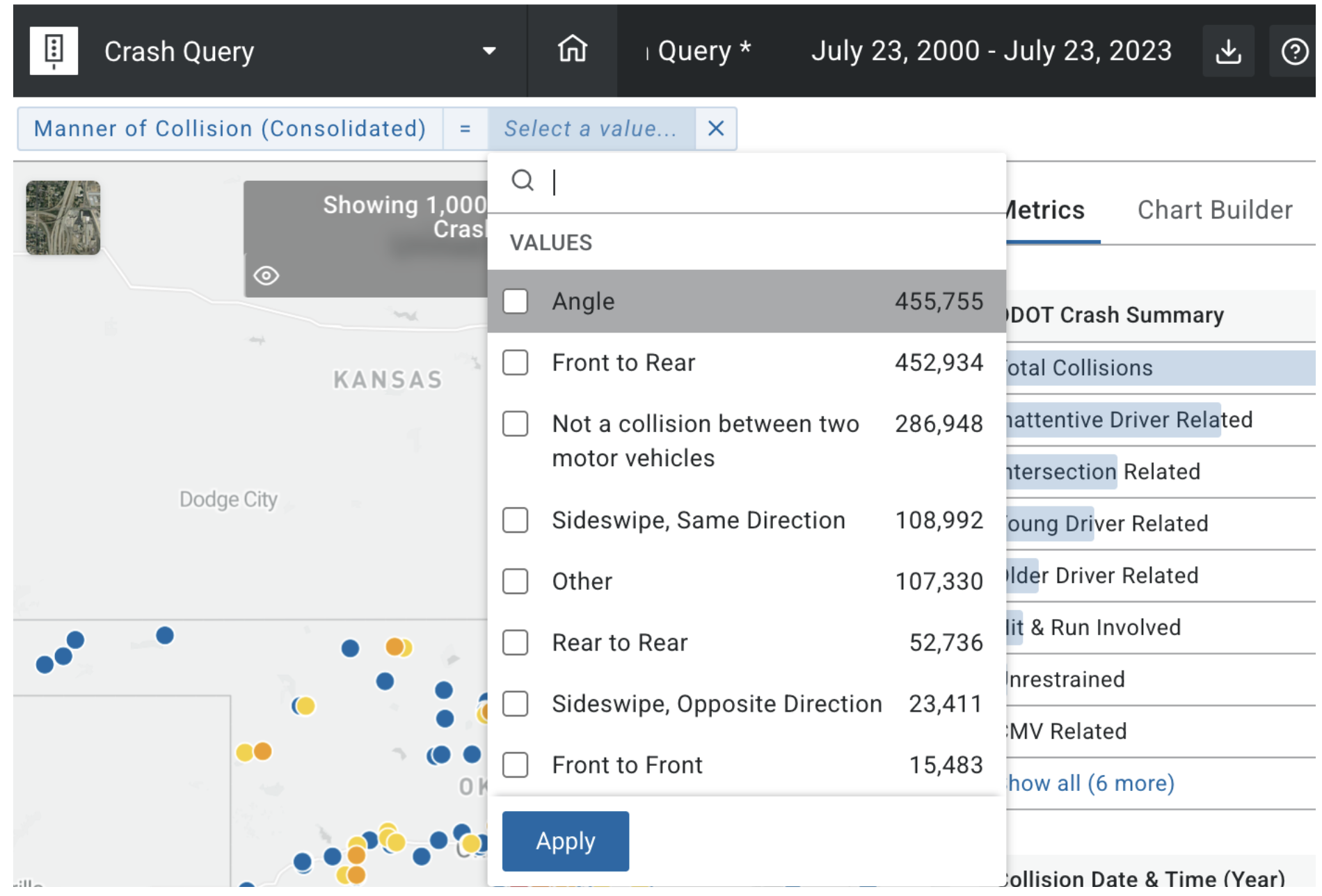
Reviewing crash patterns is a critical piece of intersection analyses, as it helps determine potential traffic control or infrastructure changes. This is especially true for signal analysis projects or early-phase project planning, where identifying crash types and patterns at a location can influence the scope or direction of a proposal.
The consolidated filter empowers team members by reducing the time spent filtering and interpreting crash data. The standardized categories increase consistency and comparability across different reports and geographic regions. The filter helps align local roadway safety analysis efforts with federal standards and reporting guidelines.
The simplified manner of collision preserves the original intent behind the officer’s classification while reducing the impact of errors in the underlying crash data, such as miscoded directions or turning movements. This streamlined approach minimizes the need for time-consuming data cleansing and often leads to conclusions similar to those reached through more detailed reclassification efforts.
“ODOT is an innovative and responsive leader in the Transportation Field. We value our people for individual and team contributions, empowering them to make decisions through productive partnerships. We are accountable in meeting the transportation needs of citizens, business, and industry in the safest, most proficient manner possible.”
–Oklahoma Department of Transportation
More information on this topic can be found below: