Implementation Effort
- Requires minimal effort
- Timeline between 2-3 weeks*
* Assuming an agency has an existing, configured AASHTOWare Safety instance and all required data

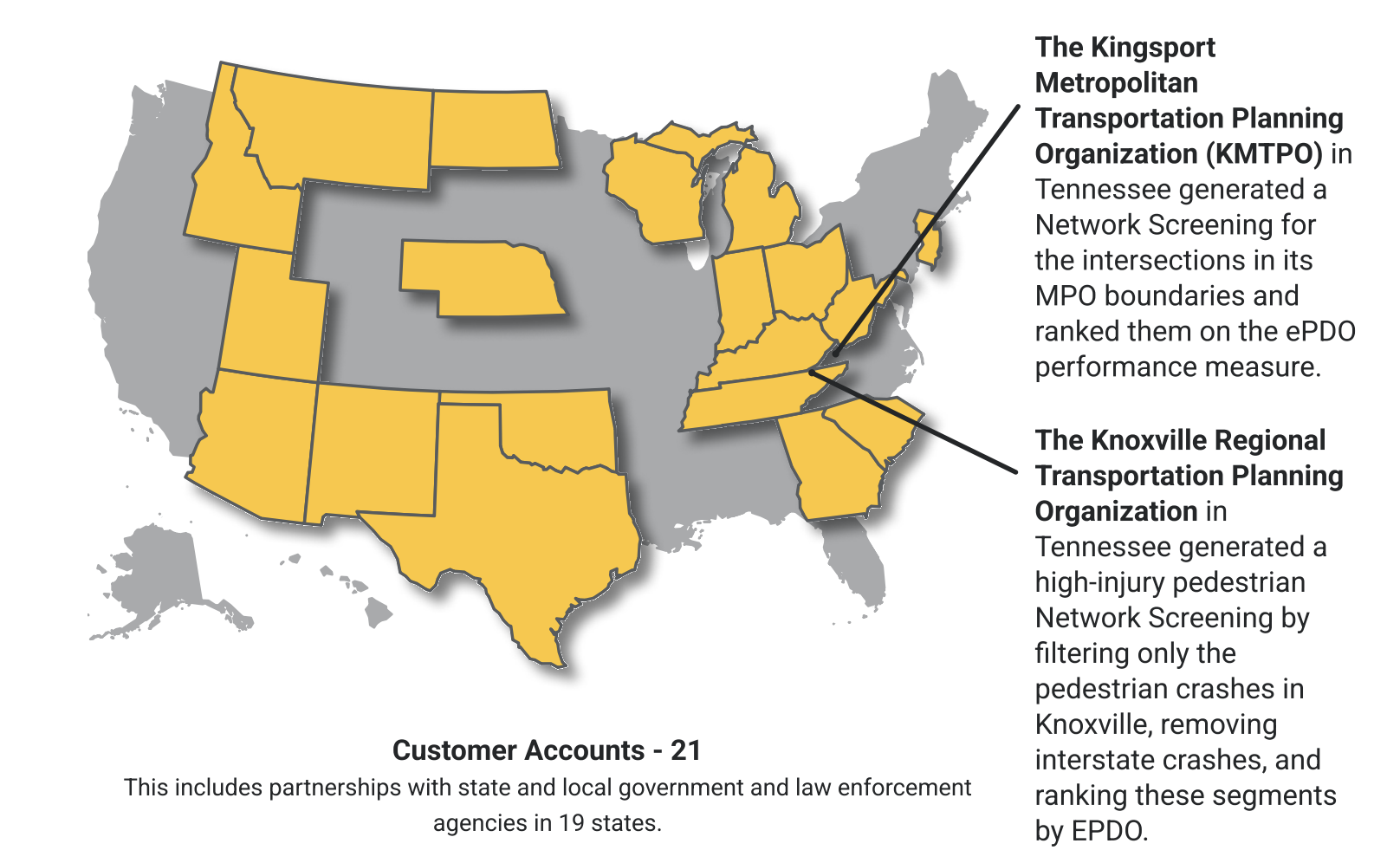
Our Customer Success team helps agencies turn crash data into actionable insights. The processes below show how they’re making their communities safer.
Several local agencies have developed High Injury Networks using EPDO weighting as the performance measure within AASHTOWare’s Network Screening applications, providing a more comprehensive and proactive approach to assessing roadway safety performance.
* Assuming an agency has an existing, configured AASHTOWare Safety instance and all required data


Local agencies across the country are increasingly expected to ground their safety strategies in data-driven analysis. One of the most effective tools for this critical work is the creation of a high-injury network. This network highlights the segments, intersections, and corridors in their community where a disproportionate share of severe crashes occur. Ranking these roadways in a single list makes it easier to plan targeted safety investments where they will have the greatest impact.
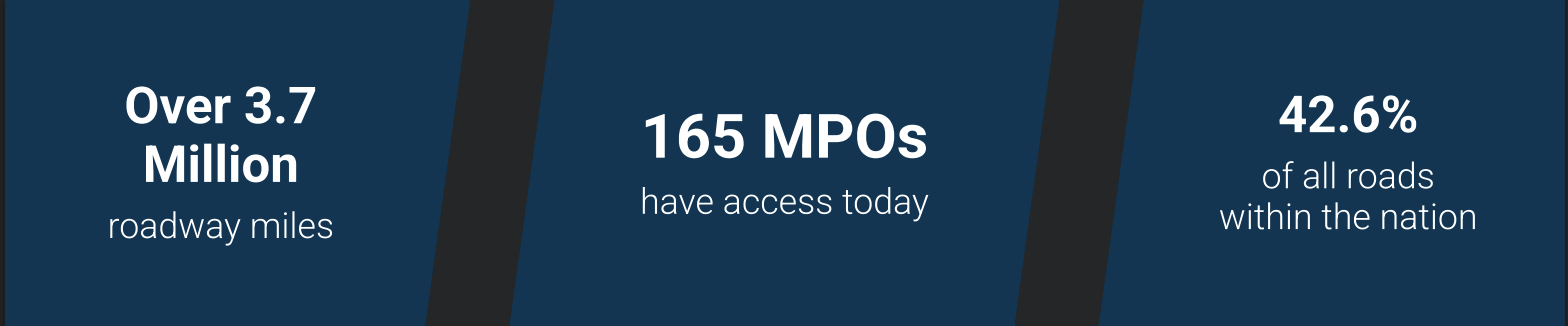
Several local agencies, including Regional and Metropolitan Planning Organizations, as well as those at the city and county level, are using AASHTOWare Safety to create a high-injury network for their roadways.
High-Injury Networks in Safety Planning
High-injury networks are an essential part of local transportation safety planning. For example, they are one requirement for some federal grant funds. Programs such as the Safe Streets and Roads for All (SS4A) initiative require data-backed evidence of safety needs. A ranked list of roadways seeing high-severity crashes is crucial to show where serious safety issues are concentrated in these communities.
Additionally, high-injury networks play an important role in annual safety planning for local organizations. Whether MPOs are aligning with the statewide Highway Safety Improvement Program (HSIP) targets or establishing local-specific targets, a high-injury network enables focusing improvements where they will best address required measures.
High-injury networks are also a core component of Vision Zero initiatives. These roadway rankings provide the foundation for strategies to eliminate serious roadway injuries and fatalities.
Several agencies are using AASHTOWare Safety to rank roads by EPDO (equivalent property damage only) to build their high-injury networks. EPDO assigns weighted values to crash severities, normalizing all crashes into a single measure. Typically, fatal crashes are given the highest weight, and serious injuries are assigned lower but still significant weights. Crashes with no injuries (property damage only) receive the lowest weight. A higher EPDO number indicates that crash injuries on this roadway are more severe.
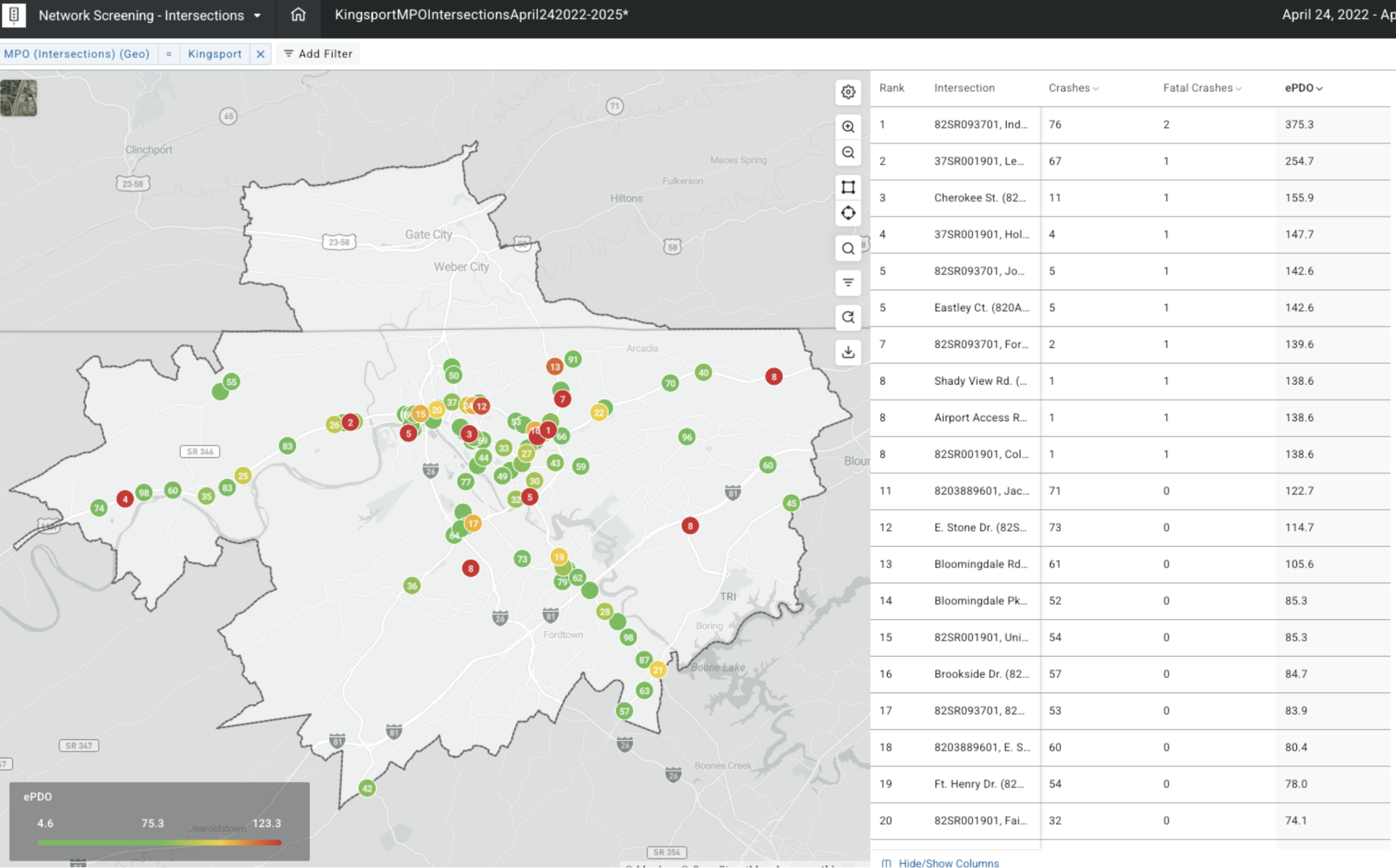
(High-Injury Network Screening generated by the Kingsport Metropolitan Transportation Planning Organization (KMTPO) in TN)
This method allows planners to see beyond raw fatality counts and understand where overall crash risk may be the greatest in their network. Using EPDO ensures locations with repeated injury crashes are not overlooked, even if a fatality hasn’t occurred yet.
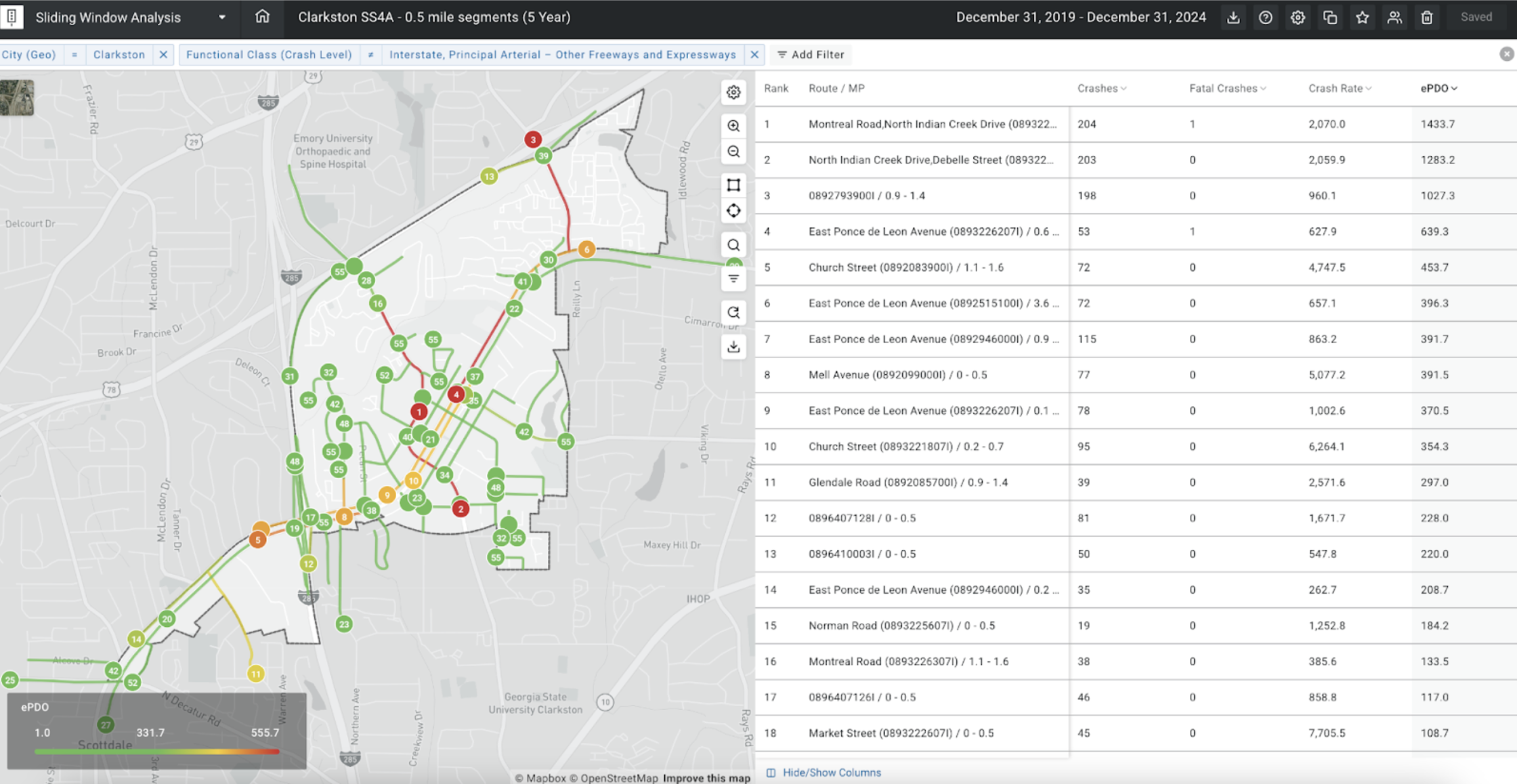
(High-Injury Network Screening in Clarkston, GA)
The result is a balanced approach to safety planning. Instead of waiting for more severe outcomes to happen, these roadways are flagged by agencies to address these corridors before crashes result in severe injuries or fatalities.